
Cleaner Samples, Clearer Results: S-Trap™ MAM Redefines Biotherapeutic Sample Preparation
Related Articles



Cleaner Samples, Clearer Results: S-Trap™ MAM Redefines Biotherapeutic Sample Preparation
Multi-Attribute Method (MAM) analysis facilitates concurrent monitoring of multiple critical quality attributes (CQAs) during biotherapeutic characterization by LC-MS/MS. The integrity of sample preparation is essential, as contaminant carryover, protein loss, and preparation-induced modifications have a direct, measurable and potentially very negative impact on analytical results.
The S-Trap™ MAM Kit provides a standardized 96-well workflow for biotherapeutic sample preparation that combines efficient protein cleanup with on-plate enzymatic digestion. A comparative examination between the kit and a published MAM workflow (Figure1; 1) using the model NISTmAb RM 8671 biologic showed that while both workflows achieved complete sequence coverage, they were very different in their ability to handle various contaminants such as detergents and polymers.
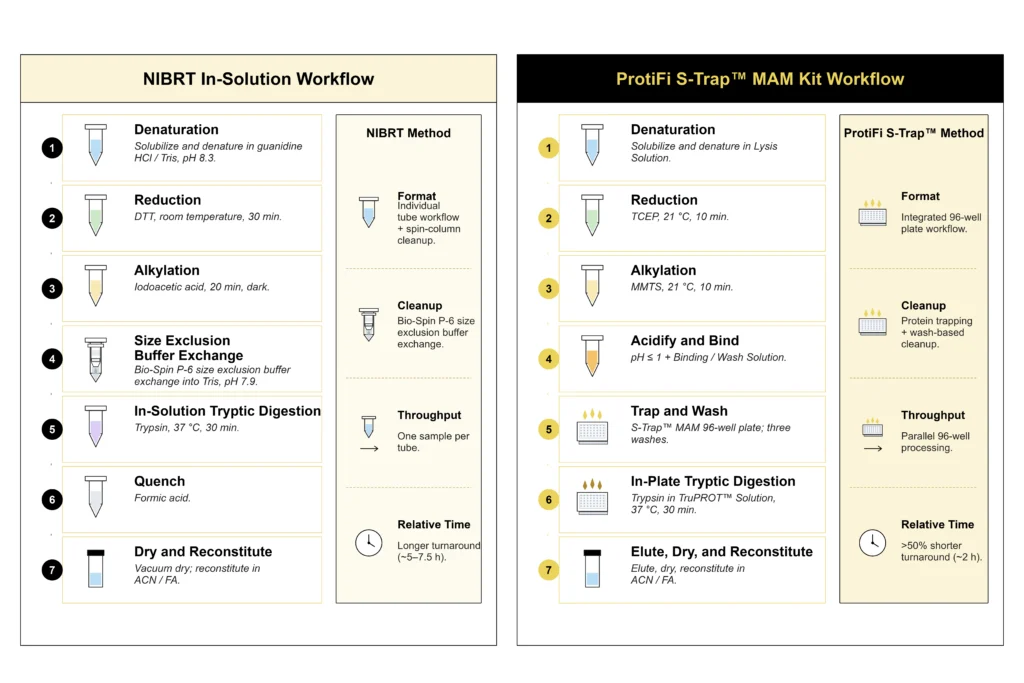
Figure 1. In solution workflow compared to MAM kit workflow.
Specifically, using the S-Trap™ MAM kit, samples spiked with bioprocess-relevant foulants including polysorbate-80, Brij-35, or PEG-8000 produced peptide preparations with no detectable LC-MS/MS signals from the polymer and surfactant additions. In contrast, sample preparations using the published protocol had large contaminant signal, a result consistent with the method’s use of size exclusion chromatography that by its design will not remove large polymers or detergent micelles (Figure 2). These results demonstrate the kit’s effective removal of MS-incompatible additives in samples relevant to the analysis of biologics.
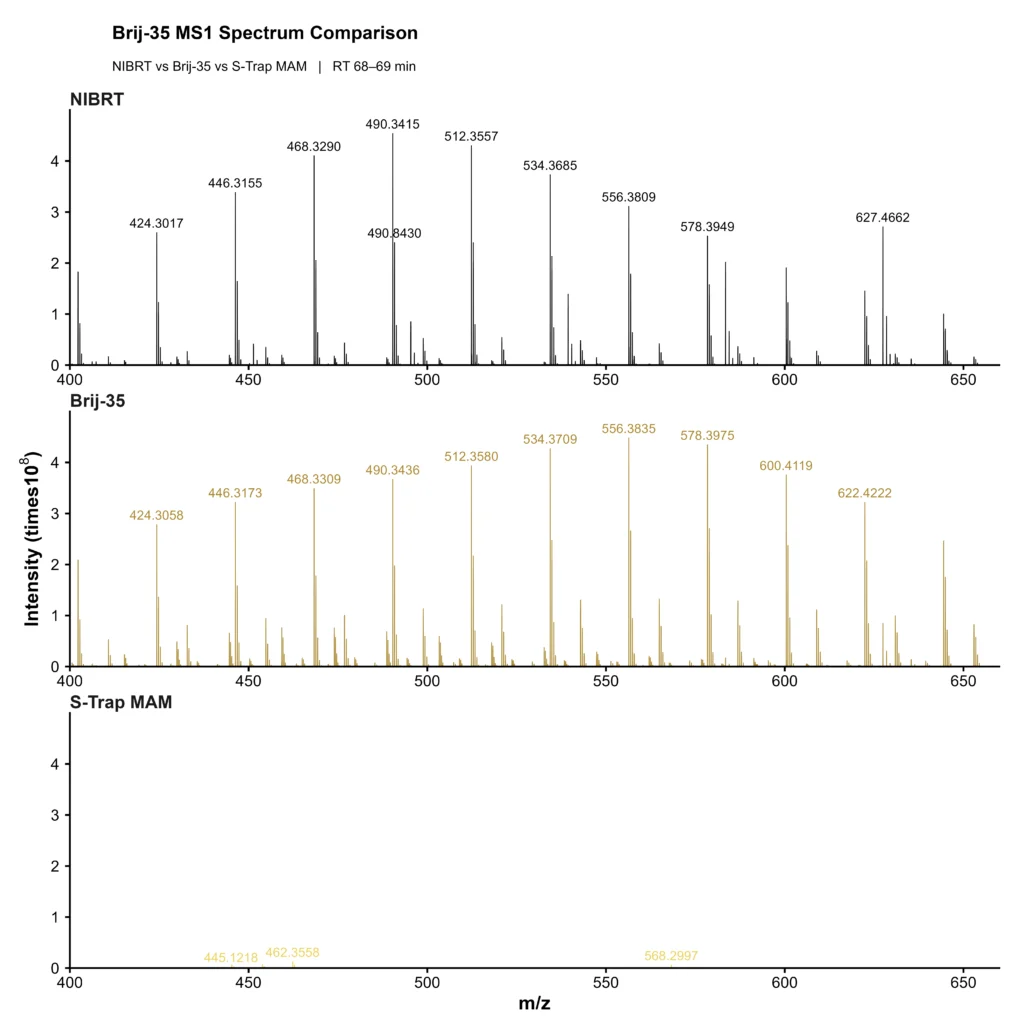
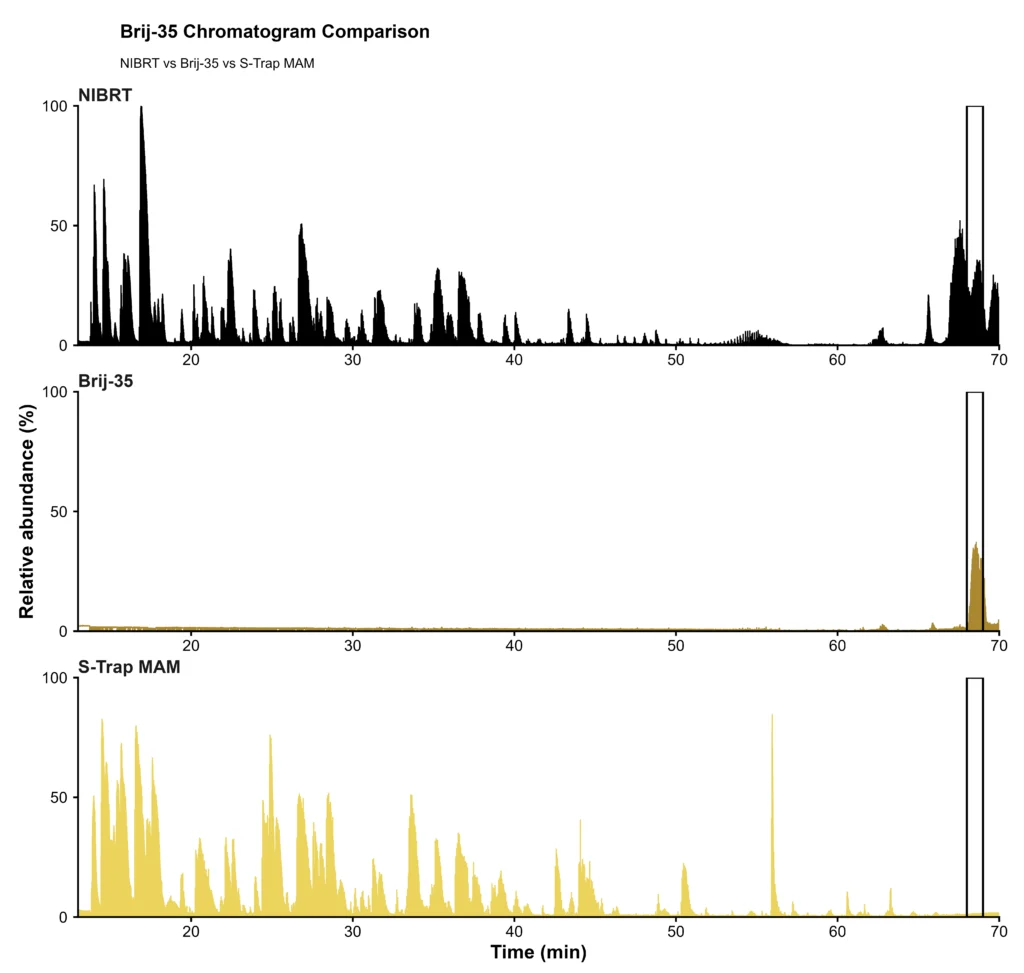
Figure 2. Comparison of detectable surfactant and polymer foulant signals following NIBRT and S-Trap™ MAM sample preparation. Normalized base peak intensity (BPI) chromatograms are shown for Brij-35 with foulant-only references shown in the middle panels and samples processed using NIBRT (top) and the S-Trap™ MAM Kit (bottom). Corresponding representative MS1 spectra are shown for Brij-35. Each workflow/foulant condition was prepared in triplicate (n = 3 independent sample preparations per condition). The chromatograms and spectra shown are from a single representative replicate; concordant profiles were observed across the remaining replicates. Spectral intensities are shown as raw intensity. Under the LC–MS/MS conditions evaluated, signals corresponding to Brij-35 were not detected following S-Trap™ MAM sample preparation, in contrast to the detectable signals observed following the NIBRT workflow (2)
The S-Trap™ MAM workflow produced lower measured levels of CQA modifications: N318 deamidation was quantified to below 0.1% compared to 1.3% observed with the published workflow. Reduced deamidation at N387 (from the PENNYK peptide) and reduced deamidation overall, in addition to decreased oxidation were also observed. The workflow produced higher total protein recovery and importantly, allowed for the identification of more host cell proteins (HCPs) identifications, facilitating deep characterization beyond the therapeutic antibody itself (figure 3). These findings are a selection of data presented in our publication (2) in Pharmaceuticals as part of the Special Issue entitled: Characterization and Quality Control of Biopharmaceuticals Using the Multi-Attribute Method (MAM): Advantages and Challenges.
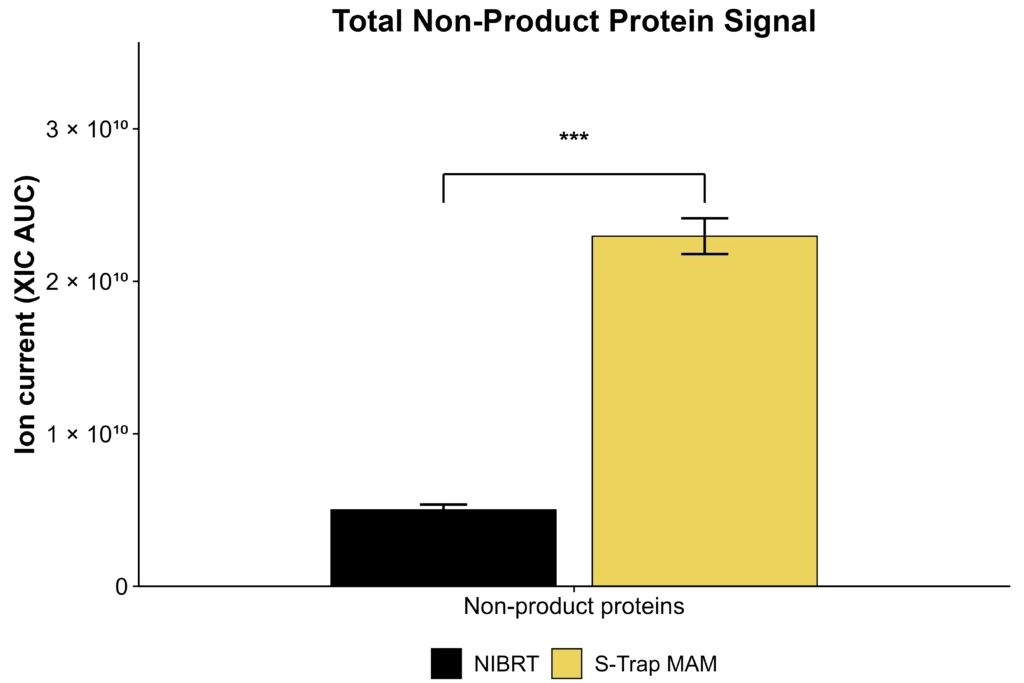
Figure 3. Comparison of NISTmAb product and non-product protein detection following S-Trap™ MAM and NIBRT sample preparation. Total non-product protein signal per sample, calculated as the summed XIC area under the curve (AUC) across 48 non-NISTmAb protein entries detected in at least one of the six selected samples. Bars represent means and error bars indicate standard deviations (SD) from three independent preparations per workflow (n = 3)(2).
S-Trap™ MAM is compatible with manual and automated 96-well processing platforms, delivering a standardized solution for biotherapeutic sample preparation. The workflow consistently yields clean samples, reduced preparation-induced artifactual modifications, and supports comprehensive CQA analysis. Implementation of S-Trap™ MAM enables generation of high-quality LC-MS/MS data with enhanced reproducibility throughout all stages of biotherapeutic development from bioreactor culture through to finished product.
References:
- Millán-Martín, S., Jakes, C., Carillo, S. et al., Comprehensive multi-attribute method workflow for biotherapeutic characterization and current good manufacturing practices testing. Nat Protoc 18, 1056–1089 (2023). https://doi.org/10.1038/s41596-022-00785-5
- Scherzi, T.; Sagatova, A.; Wilson, S.; Wilson, J.P. Standardized Kit-Based Sample Preparation for Multi-Attribute Method Analysis of Biotherapeutics.Pharmaceuticals 19, 1750 (2026). https://doi.org/10.3390/ph19111750
