
Optimizing Sample Prep for FFPE Tissue Proteomics in Translational Research
Related Articles



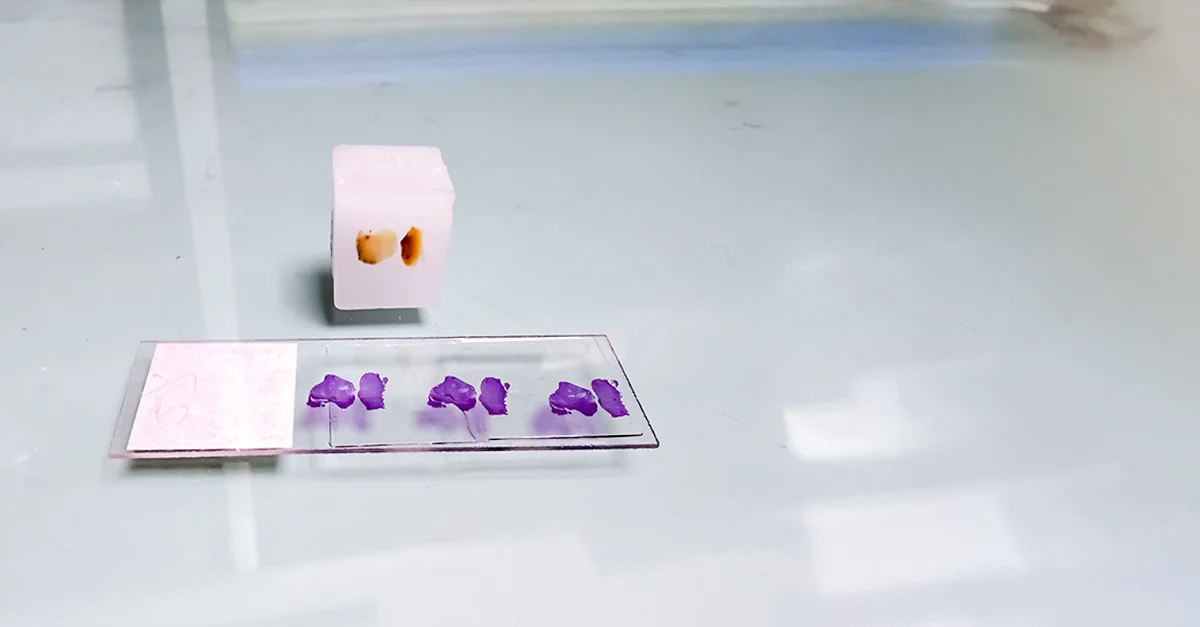
Mining formalin-fixed, paraffin-embedded (FFPE) samples represents one of, if not the, the biggest opportunity in translational biomedical research, because FFPE captures real-world disease biology at scale: fixation preserves tissue architecture and cellular detail, and embedding enables thin sectioning for staining and immunohistochemistry (IHC) (2,4). FFPE samples are also uniquely stable at room temperature for decades, if not longer (5,13,14), a feature that led FFPE to become and remains the default format of sample preservation in clinical pathology and biobanking (11,13,14). Resultingly, pathology and biobanking archives have grown to absolutely enormous scale – “billions” of FFPE specimens in published estimates (13,14) – sampled at literally every condition of health and disease at every stage (11); these samples are often paired with rich clinical annotation and long follow-up, and rare diseases and diverse treatment histories are well represented. To my knowledge, no other specimen types capture real-world human disease biology at a comparable scale, and no other sample is as physically robust.
Yet the same stability and chemistry that makes FFPE so useful for histology creates challenges. Namely, wax and crosslinking are mutually incompatible with most analytical techniques, including proteomics. Hydrophobic paraffin contaminates, clogs column and results in unacceptable LC–MS performance (4,5,10). Formaldehyde fixation can cause chemical artifacts and literally turns samples into one giant molecule: proteins become locked into insoluble, inflexible networks that result in inefficient extraction, huge pellets and inhibited digestion. Unfortunately, “tissue in” often turns into “few peptides out” (3–6). Effective analysis to reveal the true underlying state of biology obligates that we rewind the very features that make tissue archival possible.
However, FFPE proteomics does not have to be “second class.” With the right sample preparation including steps of extraction, homogenization and cleanup strategy, quantitative results from archival FFPE closely mirror that of paired flash-frozen tissues. Our HYPERsol workflow is a clear example: direct solubilization in 5% SDS, ultra- or megasonication (respectively at 500 kHz or 2 MHz) paired with S-Trap™ processing, yields depth and reproducibility on par with paired frozen tissue. Proteome quantifications also track with an average correlation of R = 0.94 and successful analysis of specimens stored for up to 17 years (5).
Brief history of FFPE
FFPE emerged when chemical sample fixation and paraffin infiltration embedding were efficiently combined into a single protocol (1,2,16,17). In the 1860s, paraffin infiltration embedding, in which water in tissue is removed by dehydration and clearing, then replaced with wax, was developed (16). Building on wax-based approaches described by Salomon Stricker (1834–1898) and paraffin experiments by Theodor Albrecht Edwin Klebs (1834–1913) that revealed challenges of infiltration, Wilhelm His Sr. (1831–1904) formalized a dehydration-clearing-paraffin infiltration (embedding) workflow that underlies modern practice (16). Fixing techniques were still evolving and in 1893, Ferdinand Blum (1865–1959), after noticing hardening of his fingertips during [ungloved] sample handling, showed that dilute formaldehyde “formalin” could preserve tissue with relatively little distortion while maintaining microscopic detail, making fixation reliable enough to withstand subsequent solvent and hot wax steps (2,17). This sequence defines the process we use today: fixation, then dehydration/clearing and finally paraffin infiltration/embedding (2,16,17). A later milestone was antigen retrieval, developed to address a key consequence of formalin fixation: crosslinking can mask epitopes and weaken antibody binding. Heat-induced epitope retrieval (HIER), popularized in the early 1990s (including microwave heating of FFPE sections in defined buffers), uses heat and buffer chemistry to partially reverse or relax fixation-related crosslinks and restore immunoreactivity (18,19). Heat-assisted de-crosslinking steps are now widely used in proteomic workflows (5,10).
Sample prep is essential to FFPE analysis
FFPE proteomics doesn’t really suffer from an “instrument problem.” It’s also not typically a “sample problem.” Rather, it is a chemistry-and-handling challenge that shows up before a sample ever reaches a mass spectrometer. Formaldehyde fixation forms a network of methylene bridges and related adducts among proteins (as well as between proteins and other crosslinkable biomolecules), necessarily locking structures in place and simultaneously making them very difficult to solubilize and digest (3,17). Paraffin is a water-insoluble contaminant matrix obligatory for FFPE that must obligatorily be removed to protect analytical instrumentation (4–6,10). The result is that extraction efficiency, crosslink reversal and efficiency of cleanup determine depth of coverage, reproducibility and quantitative accuracy (5–7,10,11).
FFPE sample prep consists of three obligatory prerequisites, all of which must be successful for a protein to be detected (and especially membrane, ECM and low-abundance species): 1) homogenization of the physical structure and release from chemical crosslinks; 2) solubilization of the newly freed proteins; and finally 3) recovery into an MS-compatible (read “contaminant and artifact free”) peptide mixture. Any proteins for which those steps are unsuccessful are lost, unsampled and results in the “proteome you measure” becoming a biased subset of the “proteome that was there” (5–7,10,11). Robust, standardized workflows are thus absolutely obligatory in translational work, in particular in cases when the biological signal are subtle and cohorts may be heterogeneous: “bad” samples may be present, but will be indistinguishable with high variability in sample preparation. Indeed, recent reviews emphasize that clinical translation hinges on reproducibility and standardization as much as it hinges on analytical sensitivity (11).
Important factors
While the details of an optimized workflow depend on tissue type and desired readout (global proteome vs PTMs) and throughput needs, a set of variables repeatedly explains most performance differences.
Paraffin removal. Traditional deparaffinization uses xylene and graded ethanol washes; it works, but it is extremely slow and annoying, requires many transfers, introduces variability and loses proteins especially with small input amounts (5,6,10). In quantitative work, such a traditional “standard” protocol yielded correlations of 0.852 when compared to the ground truth of flash-frozen tissues; these differences arise through protein losses during the deparaffinization procedure (5). Although xylene-free and “green” approaches exist (4), the most efficient xylene-free approach developed combine lysis and direct deparaffinization using detergents and/or additional on-plate washing and decrosslinking (5,10); it has also been demonstrated in a 96-well plate format (10).
Homogenization. Mechanical disruption is essential to giving a lysis buffer access to proteins: incomplete homogenization can translate directly into lower peptide yield and poorer reproducibility (5,10). Probe sonication, adaptive focused acoustics (AFA) and PIXUL megasonication all aim to disaggregate samples, however they are not equal: ultrasonication in AFA (500 kHz) or the megasonication of PIXUL (2 MHz), both of which are available in 96-well plate formats, produce far more work cycles than a probe sonicator and are obligatory to freeing proteins and thus recapitulating underlying biology (5,9,10).
Strength of lysis. FFPE demands harsh solubilization: formalin crosslinks are not gentle and incomplete solubilization under-represents difficult protein classes (5–7). In a systematic optimization study on diagnostic FFPE specimens, extraction conditions (buffer composition, heating and related parameters) materially affected protein yield and downstream performance, reinforcing that “mild” often means “incomplete” in this matrix (7). In general, high concentrations of SDS plus heat (below) have been found to be the best approach.
Antigen retrieval or reverse crosslinking. Heating, typically near ~90–95 °C, is obligatory for analyte retrieval from FFPE (15,18,19); effective proteomics workflows apply these same high-temperature incubations to reverse crosslinks and free proteins (5,10). The trade-off is that aggressive heat can also accelerate chemical changes or degradation; in practice, the goal is not “maximum harshness,” it is “enough harshness, applied consistently,” paired with a cleanup strategy that tolerates the resulting lysis chemistry (10,11).
Contaminant removal and digestion. While harsh detergents are needed for solubilization, they must be efficiently removed rapidly and reproducibly; S-Trap™-based processing serves this function very reliably and has been used in thousands of publications. S-Trapping™ was introduced as a fast, robust way to enable efficient SDS-based extraction while rapidly removing detergent and performing reactor-like digestion on a porous matrix (8). In the HYPERsol workflow, direct solubilization in 5% SDS combined with ultrasonication and S-Trap™ processing produced FFPE proteomes that closely tracked matched flash-frozen tissue, with average correlation reported as R = 0.936 and yielded substantially more peptides and protein groups than a traditional xylene/probe/precipitation workflow (5). That combination matters: the workflow required the integration of direct SDS solubilization, high-quality homogenization (ultrasonication) and S-Trap™ recovery together; changing any step reduces the benefit and quality of FFPE analyses (5).
The same conclusion has been reached by other independent comparative studies. In a quantitative comparison of deparaffinization, rehydration and extraction methods for FFPE tissue proteomics and phosphoproteomics, SP3 was reported to fail due to insufficient lysis, whereas S-Trap™ produced the highest peptide yields among the evaluated workflows (6,12). This outcome is readily explained: sample fractions that remain crosslinked do not bind to beads and are therefore lost (6,10). In contrast, the on- and in-matrix digestion strategy employed by S-Traps™ yields excellent quantitative performance (5): the S-Trap™ matrix can retain insoluble remnants that continue to digest, enabling processing of “whole tissue” material rather than relying solely on a clarified supernatant (10). In a separate high-throughput, partially automated, plate-based FFPE proteomics and phosphoproteomics workflow using AFA-based, xylene-free processing, S-Trap™ and SP3 were directly compared. The authors reported that S-Trap™ consistently delivered the highest peptide yields across multiple FFPE processing methods, with particularly strong advantages in certain tissue types (10).
Scalable workflows
Modern, high-throughput FFPE proteomics studies aim to minimize transfers, apply consistent mechanical energy to homogenize, use strong lysis chemistry to prevent solubilization bias and then apply a highly effective cleanup/digestion approach. HYPERsol was developed specifically to this end and demonstrates that FFPE can near frozen-tissue performance (5). For translational research, the implications are practical: reduce variability with high-throughput plate-based processing to support cohort-sized studies (9,10). Critically, S-Traps™ allow investigators to choose solubilization conditions based on what tissues actually require (typically high concentrations of SDS), rather than what LC-MS can tolerate (5,8,10).
The translational reality: sample prep is your quality system
Clinical impact ultimately depends on more than proteome depth. The translational challenge is to produce data that are reproducible across days, operators and cohorts, and to do so with a standardized workflow. Recent critical reviews argue that the central barriers to clinical translation depends on standardization, clarity about fit-for-purpose use cases and realistic validation strategies (11). Sample prep sits at the center of those requirements: it defines what “the sample” actually is, regardless of what it was. In high-throughput FFPE workflows, quality is increasingly engineered in: pathology-guided macrodissection to control tissue composition, protein quantification for normalization, plate-based handling to reduce variability and robust cleanup to protect LC-MS performance (10). These are not “nice-to-haves.” They are the mechanics that make retrospective cohorts analyzable with confidence.
Closing perspective
FFPE proteomics is now less about whether it can be done and more about whether it can be done reliably enough to matter in translational pipelines. The literature points to a consistent conclusion: performance rises when you stop treating wax removal, crosslink reversal, homogenization and cleanup as independent steps and instead optimize them as a single engineered workflow (5–7,10,11). Within that engineered view, S-Trap™-based processing in the HYPERsol workflow is unusually well matched to FFPE realities as it tolerates the harsh solubilization FFPE demands and converts it into clean, MS-ready peptides with speed and scalability (5,8,10).
References
- Musiał A, Gryglewski RW, Kielczewski S, Loukas M, Wajda J. Formalin use in anatomical and histological science in the 19th and 20th centuries. Folia Med Cracov. 2016;56(3):31–40. PubMed
- Donczo B, Guttman A. Biomedical analysis of formalin-fixed, paraffin-embedded tissue samples: The Holy Grail for molecular diagnostics. J Pharm Biomed Anal. 2018;155:125–134. PubMed
- Thavarajah R, Mudimbaimannar VK, Elizabeth J, Rao UK, Ranganathan K. Chemical and physical basics of routine formaldehyde fixation. J Oral Maxillofac Pathol. 2012;16(3):400–405. Full text on PMC
- Mitsa G, Guo Q, Goncalves C, et al. A Non-Hazardous Deparaffinization Protocol Enables Quantitative Proteomics of Core Needle Biopsy-Sized Formalin-Fixed and Paraffin-Embedded (FFPE) Tissue Specimens. Int J Mol Sci. 2022;23(8):4443. Full text on MDPI
- Marchione DM, Ilieva I, Devins K, et al. HYPERsol: High-Quality Data from Archival FFPE Tissue for Clinical Proteomics. J Proteome Res. 2020;19(2):973–983. Full text on PMC
- Humphries EM, Loudon C, Craft GE, Robinson PJ. Quantitative Comparison of Deparaffinization, Rehydration, and Extraction Methods for FFPE Tissue Proteomics and Phosphoproteomics. Anal Chem. 2024. PubMed
- Dressler FF, Schoenfeld J, Revyakina O, et al. Systematic evaluation and optimization of protein extraction parameters in diagnostic FFPE specimens. Clin Proteomics. 2022;19:10. Full text on PMC
- Zougman A, Selby PJ, Banks RE. Suspension trapping (STrap) sample preparation method for bottom-up proteomics analysis. Proteomics. 2014;14(9):1006–1010. PubMed
- Mar D, Babenko IM, Zhang R, et al. A High-Throughput PIXUL–Matrix-Based Toolbox to Profile Frozen and Formalin-Fixed Paraffin-Embedded Tissues Multiomes. Lab Invest. 2024;104(1):100282. Full text on PMC
- Haines M, Thorup JR, Gohsman S, et al. High-Throughput Proteomic and Phosphoproteomic Analysis of Formalin-Fixed Paraffin-Embedded Tissues. Mol Cell Proteomics. 2025;24(9):101044. Full text on PMC
- AlHammadi SA, Nagshabandi LN, Muhammad H, Sukkarieh HH, Aljada A. Mass spectrometry-based proteomics of FFPE tissues: progress, limitations, and clinical translation barriers. Clin Proteomics. 2025;22:45. Full text on PMC
- Hughes CS, Foehr S, Garfield DA, Furlong EE, Steinmetz LM, Krijgsveld J. Ultrasensitive proteome analysis using paramagnetic bead technology. Mol Syst Biol. 2014;10(10):757. Full text on PMC
- Eccher A, Seminati D, L’Imperio V, et al. Pathology Laboratory Archives: Conservation Quality of Nucleic Acids and Proteins for NSCLC Molecular Testing. J Pers Med. 2024;14(4):333. Full text on MDPI
- Wolff C, Schott C, Porschewski P, Reischauer B, Becker K-F. Successful Protein Extraction from Over-Fixed and Long-Term Stored Formalin-Fixed Tissues. PLoS ONE. 2011;6(1):e16353. Full text on PLOS
- Catenacci DVT, Liao W-L, Thyparambil S, et al. Absolute Quantitation of Met Using Mass Spectrometry for Clinical Application: Assay Precision, Stability, and Correlation with MET Gene Amplification in FFPE Tumor Tissue. PLoS ONE. 2014;9(7):e100586. Full text on PMC
- van der Lem T, de Bakker M, Keuck G, Richardson MK. Wilhelm His Sr. and the development of paraffin embedding. Der Pathologe. 2021. Springer article
- Fox CH, Johnson FB, Whiting J, Roller PP. Formaldehyde fixation. J Histochem Cytochem. 1985;33(8):845–853. Full-text PDF
- Shi SR, Key ME, Kalra KL. Antigen retrieval in formalin-fixed, paraffin-embedded tissues: an enhancement method for immunohistochemical staining based on microwave oven heating of tissue sections. J Histochem Cytochem. 1991;39(6):741–748. PubMed
- Krenács T, Krenács L, Stelkovics E, Raffeld M. Heat-Induced Antigen Retrieval for Immunohistochemical Reactions in Routinely Processed Paraffin Sections. Methods Mol Biol. 2010;588:103–119. PubMed
